


APAC CIOOutlook
About UsConferencePartner With Us
  • Technologies
    • Blockchain
      Data Intelligence and Management
      Digital Transformation
      FinTech
      Generative and Agentic AI
      Low Code No Code
      Mobile Application
      Networking
      Robotics
      Storage
      Wireless
  • Industries
    • Automotive
      Aviation
      Banking
      Construction
      E-Commerce
      Food and Beverages
      Healthcare
      Insurance
      Logistics
      Manufacturing
      Retail
      Supply Chain
      Travel and Hospitality
  • Platforms
    • Microsoft
      Salesforce
      SAP
  • Strategic Solutions
    • Business Intelligence
      Contact Center
      Corporate Finance
      CRM
      Cyber Security
      Data Center
      Enterprise Asset Management
      Enterprise Performance Management
      IT Infrastructure and Services
      Managed Services
      Procurement
      Unified Communication
      Workflow
  • Home
  • CXO Insights
  • Leadership Perspectives
  • Innovation Insights
  • Research
  • News
  • Whitepapers
  • CXO Awards
#

Apac CIOOutlook Weekly Brief

×

Be first to read the latest tech news, Industry Leader's Insights, and CIO interviews of medium and large enterprises exclusively from Apac CIOOutlook

Subscribe

loading

THANK YOU FOR SUBSCRIBING

  • Home
Editor's Pick (1 - 4 of 8)
left
Do What You Want To Do, Not What You Have To Do

Curt Pederson, CIO, University of Portland

Analytics and Simulation-Powerful Tools in Business

Robert Roser, CIO, Fermilab

Technology should be Seamless across all Form Factors

Jeff Willis, CIO, Allrecipes

A creative approach to remote simulator installations

Sharon Cooke, CEO, Airways International Ltd

First Principle Models to bolster the Digital Twin Panorama

Richard Porter, Principal Engineer, Simulation, Yokogawa Australia Pty Ltd

The Game Changing Face of Simulation

Yu Fang Yong, Expert in Mechanical Architecture Structural Simulation Test and Analysis, Continental and Wong Chee Ling, Group Leader of Electrical and Mechanical Simulation and Verification, Continental

Airways NZ: Taking Advanced Simulation to the Skies

Sharon Cooke, CEO, Airways International Ltd

Critical Human Skills Requirements for the Digital Revolution

Dr Jolanda G. Tromp, Director Center for Visualization & Simulation, Duy Tan University

right

Using Simulation to Improve Patient Safety and Quality of Care How the Nemours Institute for Clinical Excellence is Taking Simulation Further

Maria Carmen G. Diaz, Medical Director of Simulation, Nemours Institute for Clinical Excellence, North. and Shiva Kalidindi, Medical Director of Simulation, Nemours Institute for Clinical Excellence, South

Tweet
content-image

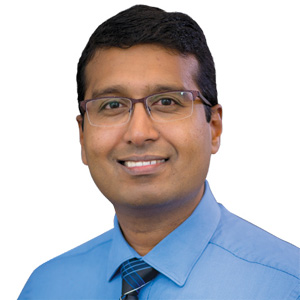
Maria Carmen G. Diaz, Medical Director of Simulation, Nemours Institute for Clinical Excellence, North.
For an article in a technical magazine, it may be surprising to learn that we consider the actual technology involved in healthcare simulation as one piece of a larger puzzle. Ultimately, Nemours is using simulation to improve quality of care and patient safety by creating realistic environments that allow participants to practice, learn, evaluate, test and gain a better understanding about systems and actions.

Establishing a world-class simulation program

Nemours is an internationally recognized children’s health system that owns and operates Nemours/Alfred I. duPont Hospital for Children in Wilmington, Del., and Nemours Children’s Hospital in Orlando, Fla., along with outpatient facilities in six states, delivering pediatric primary, specialty and urgent care.

In 2013, Nemours established the Nemours Institute for Clinical Excellence (NICE), and with two major campuses in Delaware and Florida, formalized simulation programs at NICE North (Delaware Valley) and NICE South (Florida). NICE’s mission is to advance patient safety and quality of care by promoting clinical excellence through the use of simulation.

In our simulations, learners are immersed in hands-on interactive environments that allow them to experience scenarios without putting patients at risk. NICE trains, educates and guides participants through realistic scenarios and debriefings. By and large, it is the debrief where participants learn the most. We walk through—step-by-step —what occurred, what went right, as well as opportunities to improve performance, teamwork and communication. This is done through a safe, risk-free, supportive, encouraging and collaborative environment.

In June 2018, NICE North was awarded accreditation by the Society for Simulation in Healthcare. After an incredibly rigorous application process, this nod from a renowned organization acknowledged how much our team is doing to provide world-class simulation experiences. In addition, we are often asked to partner with other organizations to study how we may advance the field of simulation on a larger scale, as well as to present our findings at national and international conferences.

A different approach

We believe that our holistic approach to simulation allows us to improve patient safety and quality of care. While many simulation programs focus on technical aspects such as how to place an IV or how to intubate a patient, NICE goes beyond the technical by also emphasizing the importance of cognitive and behavioral skills.

Shiva Kalidindi, Medical Director of Simulation, Nemours Institute for Clinical Excellence, South

Yes, we want our participants to know how to perform a procedure, but we also want them to understand why the procedure needs to be performed, and to be prepared if something goes awry during that procedure. And, we believe that teamwork and communication are paramount. Through our behavioral skills training, we help participants learn to effectively communicate with the rest of their team so that they may work together to deliver optimal care. Most importantly, we strive to help our participants communicate well with patients and their families. We want them to consider how they will communicate with a family member should they need to have a difficult conversation or deliver bad news. These interactions can be a lot easier after rehearsing in simulation so that skills are honed before they are needed in a real-life setting.

Additionally, at Nemours, simulation goes beyond just education and training. We use simulation to improve our systems, processes and spaces. Several years ago, when Nemours was moving from an existing building into two new in-patient towers, we simulated every aspect of the move and learned that the originally proposed order of the move needed to be reversed. On our actual move day, Paul Kempinski, President of Nemours/Alfred I. duPont Hospital for Children in Delaware, labeled our move as seamless and uneventful. This was a great compliment as it showed that simulation let us practice until we got it right. Since then, we’ve had the opportunity to conduct multiple simulations to identify latent safety threats before we open new spaces. And, we use simulation to improve processes and flow to leverage our work-as-imagined with our work-as-done so that we may ultimately reduce the risk for medical errors.

Beyond our walls

While we know simulating experiences in our hospital settings is critical, we have also had the opportunity to extend our reach beyond our walls. We have several established simulation programs that focus on different types of providers including emergency physicians, pediatric subspecialists, primary care physicians, school nurses and emergency medical technicians. One of our most robust programs focuses on the family members who will need to continue medical care for their child at home after discharge from the hospital. NICE has a well-established simulation program that helps families and home caregivers learn how to manage their child with a new tracheostomy. NICE simulates a home setting where family members and home caregivers use a high-fidelity mannequin to learn how to suction a tracheostomy tube, change the tube and troubleshoot tracheostomy complications before their child is discharged from the hospital. The feedback has been tremendous with an overwhelming number stating that they have more confidence in caring for their child and feel more comfortable taking their child home as a result of our simulations.

What’s next?

As Nemours looks to the future of simulation, success stories like our tracheostomy training simulations and our work to improve systems and processes are helping to guide our next steps. And we always remember that simulation—at its core —is a principle and serves as the foundation upon which true learning can take place. All the available technology can make simulation even more advanced, but we try to remember Nemours’ True North: we’re pushing the simulation envelope in order to improve quality of care and patient safety.

Weekly Brief

loading
Top 10 Simulation Consulting/ Services Companies - 2020
Featured Issue

I agree We use cookies on this website to enhance your user experience. By clicking any link on this page you are giving your consent for us to set cookies. More info

APAC CIOOutlook
Follow on LinkedIn

About

  • Home
  • About Us
  • Partner With Us

Stay Connected

  • Subscribe
  • Newsletter
  • Sitemap

Contact Us

  • editor@apacciooutlook.com
  • sales@apacciooutlook.com
  • marketing@apacciooutlook.com

Legal

  • Editorial Policy
  • Privacy Policy
  • Terms of Use

© 2026 APAC CIOOutlook. All rights reserved. Headquarteblue in Fort Lauderdale, FL, USA.

This content is copyright protected

However, if you would like to share the information in this article, you may use the link below:

https://simulation.apacciooutlook.com/cxoinsights/using-simulation-to-improve-patient-safety-and-quality-of-care-how-the-nemours-institute-for-clinical-excellence-is-taking-simulation-further-nwid-7836.html